If you are interesting in this workshop, but wondering how this all works, you’ve come to the right spot. In this post, I’ll break down a few of the topics and how easy it is get a copy of a resource that have you thinking about winter weather differently that before!

In this lesson, I stress how important it is to find a trusted local weather source instead of relying on random social media posts. I’ve seen how easily misinformation spreads when people share model images or snowfall maps without context. Weather data is freely available, but it takes experience to interpret it correctly. My advice: ask questions, check timestamps, and don’t share sensational posts that exaggerate storms. Real meteorologists build trust through accuracy and consistency—especially on quiet days, not just during big events.
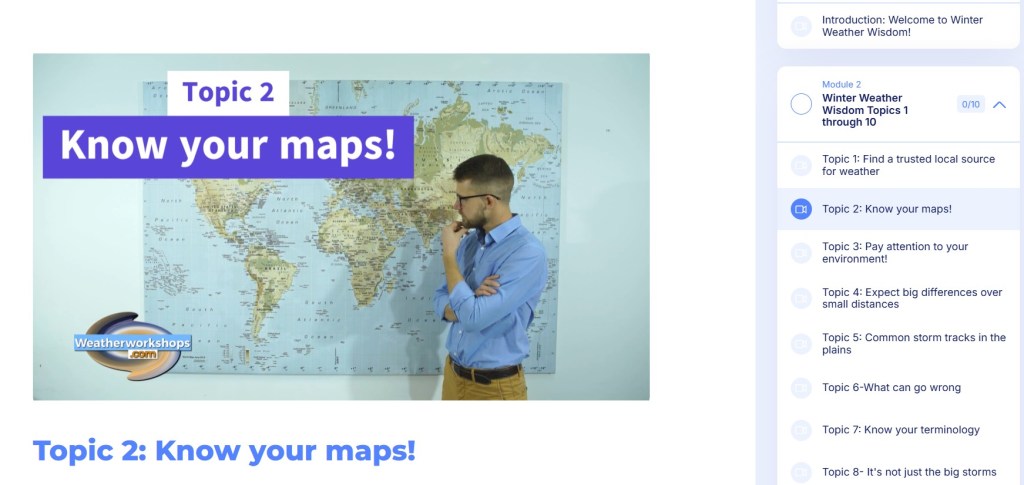
In this section, I talk about how map skills and local geography play a big role in understanding and predicting winter weather. I encourage people to move beyond relying only on GPS and start noticing the landscape around them—town names, distances, and county borders. Maps help tell the story of where storms form and where they’re headed, while topography explains why conditions can change so quickly over short distances. Features like the Black Hills and the Buffalo Ridge in the upper Midwest can dramatically influence snowfall, wind, and drifting patterns. By learning to read maps and observe your surroundings, you’ll make better, safer weather decisions through the season.
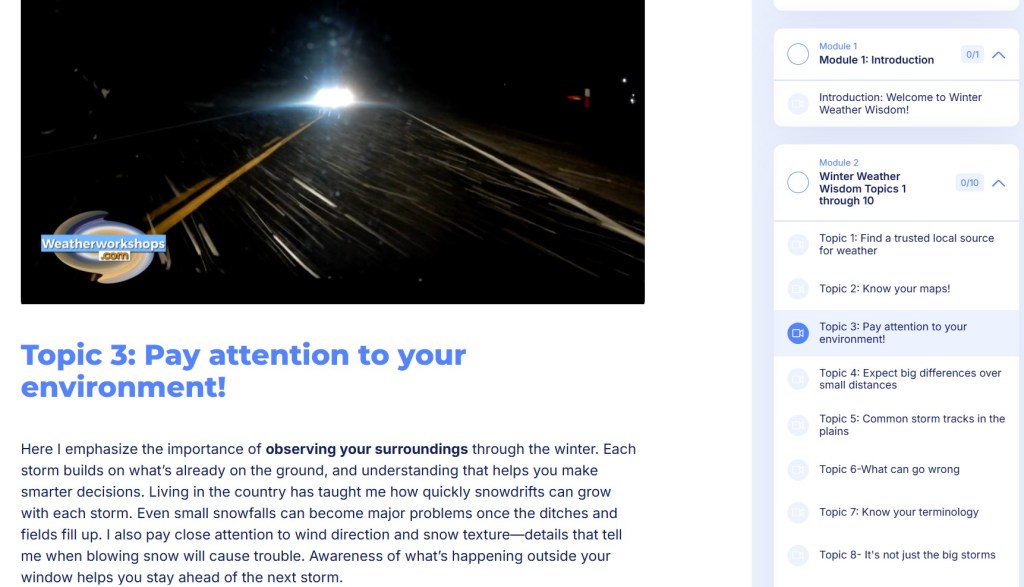
Here I emphasize the importance of observing your surroundings through the winter. Each storm builds on what’s already on the ground, and understanding that helps you make smarter decisions. Living in the country has taught me how quickly snowdrifts can grow with each storm. Even small snowfalls can become major problems once the ditches and fields fill up. I also pay close attention to wind direction and snow texture—details that tell me when blowing snow will cause trouble. Awareness of what’s happening outside your window helps you stay ahead of the next storm.
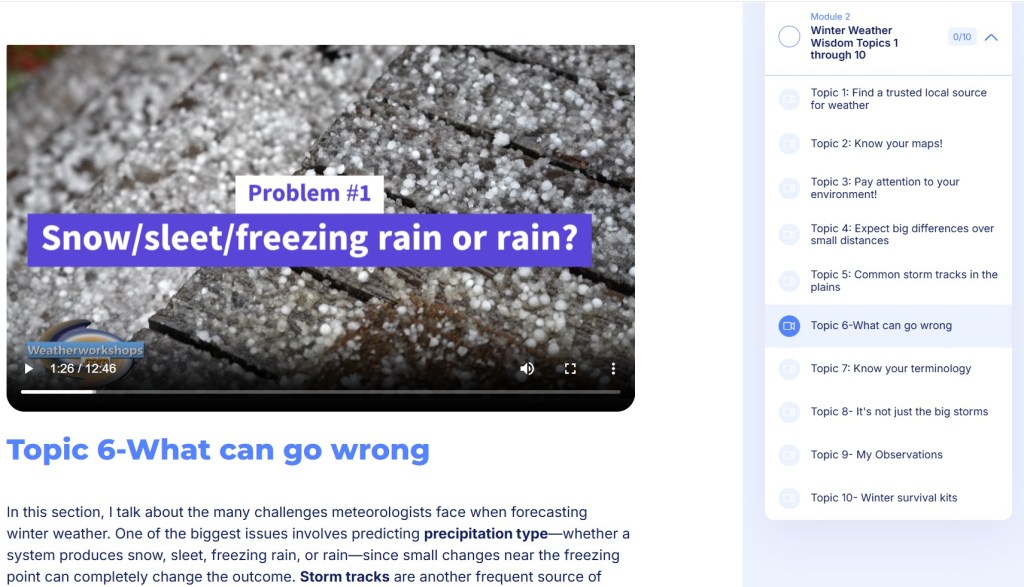
In this section, I talk about the many challenges meteorologists face when forecasting winter weather. One of the biggest issues involves predicting precipitation type—whether a system produces snow, sleet, freezing rain, or rain—since small changes near the freezing point can completely change the outcome. Storm tracks are another frequent source of error, as even a 50-mile shift can dramatically alter who gets heavy snow versus rain. Other complications include underestimating wind strength, changes in moisture supply from thunderstorms to the south, and the extreme local variability of snow bands that can create thunder snow or drastically different totals between nearby towns. Timing errors, like a storm slowing or speeding up, and unexpected ground conditions—such as crusted snow that breaks loose—can also turn a manageable event into a dangerous one. Ultimately, even with modern models, forecasting requires experience, observation, and flexibility.
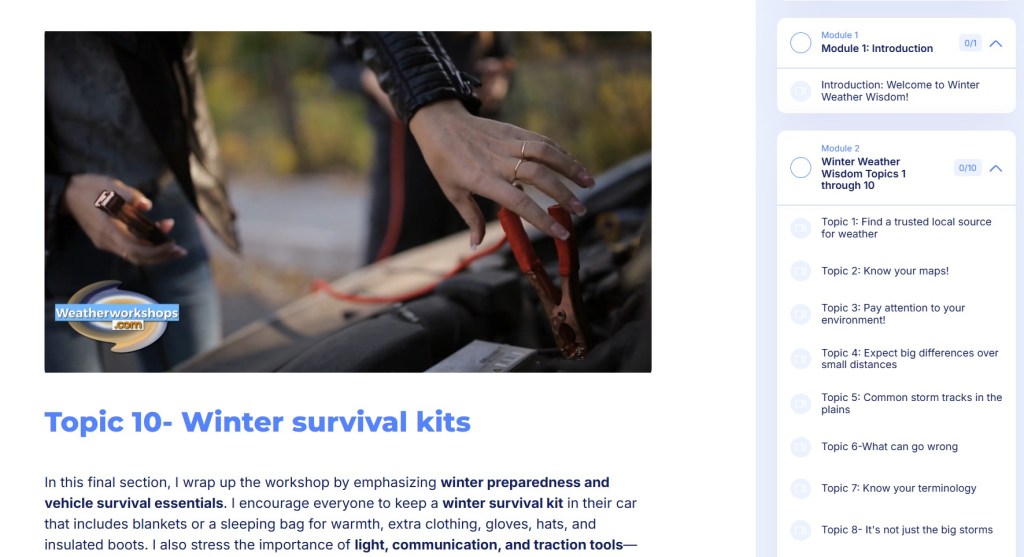
In this final section, I wrap up the workshop by emphasizing winter preparedness and vehicle survival essentials. I encourage everyone to keep a winter survival kit in their car that includes blankets or a sleeping bag for warmth, extra clothing, gloves, hats, and insulated boots. I also stress the importance of light, communication, and traction tools—carry a charged cell phone with a power bank, a flashlight, a weather radio, a small shovel, and sand or kitty litter to help if you get stuck. Food, water, and a first-aid kit are equally vital, along with any necessary medications. I remind viewers to stay with their vehicle if stranded, since walking in blizzard conditions can be deadly, and to run the engine sparingly to avoid carbon monoxide poisoning by keeping the tailpipe clear and cracking a window slightly. Lastly, always keep at least half a tank of gas in winter and check your car regularly before storms. Preparation and awareness are key to staying safe on the road when severe winter weather strikes.
Be ready for winter! Get 1 full-year access to my winter weather wisdom e-course today!




 Weather Workshops and More!
Leave a comment